
In recent years, some of the world’s largest cybersecurity breaches have not happened because hackers broke through highly sophisticated systems. Instead, they succeeded because somebody clicked the wrong link, approved the wrong login request or unknowingly gave attackers access through social engineering tactics. This is why cybersecurity training for your team matters now more than ever.
For small and medium-sized businesses especially, cybersecurity awareness for team members needs to be taken seriously. Your staff are usually the easiest ways hackers have into your business, especially if you already have secure IT systems in place.
At Inventas, we not only provide IT support for business throughout the UK but we can also give regular cybersecurity training sessions to your team members, keeping everyone on top of recent hacking trends, so they know what to look out for an minimise the risk to your business.
Here’s how:
Human Error Remains One of the Biggest Cybersecurity Risks
Cybercriminals are increasingly targeting people rather than systems. It is often easier to trick an employee into granting access than it is to bypass layers of technical security protection.
Some of the most common causes of cybersecurity breaches linked to human error include:
- Clicking phishing links in emails
- Weak or reused passwords
- Sharing login credentials
- Downloading malicious attachments
- Using unsecured devices or public Wi-Fi
- Falling victim to social engineering scams
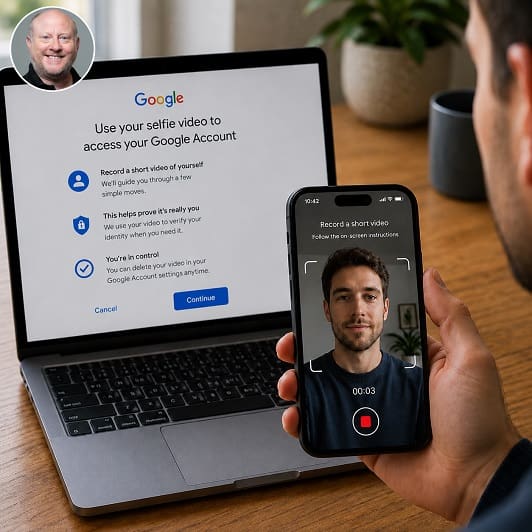
- Approving fake multi-factor authentication (MFA) requests
While businesses may have strong technical protections in place, it only takes one mistake to create a serious security incident.
The Rise of MFA Fatigue Attacks
Multi-factor authentication has become an essential cybersecurity tool and is highly effective when used correctly. However, attackers are now adapting their methods through what are known as MFA fatigue attacks or “push bombing”.
This type of attack works by repeatedly sending login approval requests to a user’s phone or authentication app. Eventually, out of confusion, distraction or frustration, the user accidentally approves the request, unknowingly giving the attacker access.
Several high-profile cybersecurity breaches in recent years have involved attackers exploiting human behaviour rather than technical weaknesses. Many businesses assume MFA alone is enough protection, but without proper staff awareness and training, even advanced security systems can be bypassed.
Employees need to understand:
- How MFA fatigue attacks work
- Why unexpected login requests should never be approved
- How to report suspicious activity quickly
- The importance of slowing down and verifying requests
Cybersecurity awareness training helps staff recognise these threats before they become major incidents.
Cybersecurity Training Is No Longer Optional
Modern cyberattacks are becoming more convincing, more targeted and increasingly powered by AI. Phishing emails can now closely mimic genuine communications from colleagues, suppliers and trusted organisations.
Without regular cybersecurity training, employees may not recognise the warning signs.
Effective cybersecurity training can help businesses:
- Reduce the risk of phishing attacks
- Improve password security habits
- Strengthen remote working security
- Increase awareness of social engineering tactics
- Improve incident reporting speed
- Reduce accidental data breaches
- Build a stronger security culture across the business
Importantly, cybersecurity training should not be treated as a one-off exercise. Threats constantly evolve, which means employee awareness should evolve alongside them.
The cybersecurity training taught at these sessions not only need to be upheld by your employees; it needs to be enforced by the business to ensure that you’re as protected as possible.
Why External Monitoring and IT Support Matters
Even with strong internal processes and staff training, mistakes can still happen. This is why having an experienced external IT team monitoring your systems can provide an additional layer of protection.
Managed IT support can help identify unusual behaviour and potential threats before they escalate.
An external cybersecurity team can assist with:
- Monitoring suspicious login activity
- Detecting unusual network behaviour
- Identifying compromised accounts quickly
- Monitoring endpoint security
- Responding rapidly to potential breaches
- Providing ongoing cybersecurity advice and support
If an employee accidentally clicks a malicious link or approves a suspicious request, early detection and rapid response can significantly reduce the impact.
Cybersecurity is no longer just about prevention. It is also about visibility, monitoring and response.
Cybersecurity Starts with People
Technology plays a vital role in cybersecurity, but people remain one of the most important parts of any organisation’s defence strategy. By combining staff training, strong security processes and expert external monitoring, businesses can significantly reduce their exposure to modern cyber threats.
Contact Inventas today to learn how proactive cybersecurity support and monitoring can help protect your business from modern cyber threats and costly user error.